Introduction
In the fast-paced world of dental laboratories, efficiency and material reliability are non-negotiable. PMMA (Polymethyl Methacrylate) remains one of the most widely used materials for temporary crowns, bridges, and prosthetics. But a common question arises among dental professionals:
👉 Does monochrome PMMA yellow over time?
At Hocera, we provide high-quality PMMA solutions and will walk you through the science, the practical concerns, and the best ways to maintain long-lasting esthetics in your restorations.
1. Understanding PMMA in Dentistry
PMMA is a biocompatible, lightweight, and easy-to-mill material often chosen for:
- Temporary crowns and bridges
- Diagnostic mock-ups
- Implant-supported provisional restorations
Its affordability and processing convenience make it indispensable in both chairside and lab workflows.
2. Why Yellowing Happens in PMMA
Like many polymers, PMMA can undergo changes over time due to external and internal factors:
- UV Light Exposure – Sunlight and intense chairside lighting can gradually affect color stability.
- Oral Environment – Coffee, tea, smoking, and staining foods can alter shade.
- Material Quality – Lower-grade PMMA may have weaker color stability and higher porosity.
- Aging Process – Natural polymer degradation can lead to slight discoloration.
3. Monochrome vs. Multilayer PMMA
- Monochrome PMMA
- Simple shade (A1, A2, B1, etc.)
- Cost-effective for short-term use
- Slightly more prone to visible yellowing if worn for extended periods
- Multilayer PMMA
- Designed with gradient color layers for a more natural appearance
- Offers slightly better aesthetics over time
- Preferred for long-term provisional restorations
4. How to Minimize Yellowing
The good news: yellowing can be significantly reduced with proper handling and product choice.
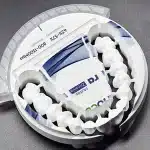
- Use high-density, medical-grade PMMA discs (like Hocera’s premium line) to reduce porosity.
- Avoid prolonged exposure to staining agents during patient use.
- Polish the surface well to reduce plaque accumulation.
- For long-term temporaries, choose multilayer PMMA for better esthetic longevity.
5. When Yellowing Really Matters
In most cases, monochrome PMMA is used for short-term temporaries—days to a few weeks—where color change is minimal and clinically insignificant.
For cases requiring months of wear, investing in high-quality multilayer PMMA ensures both function and esthetics remain stable.
Conclusion
So, does monochrome PMMA yellow over time?
✅ Yes, but mainly in extended use scenarios and depending on material quality.
With Hocera’s lab-ready PMMA solutions, you can rely on strong durability, consistent shade stability, and smooth milling performance—keeping both clinicians and patients satisfied.