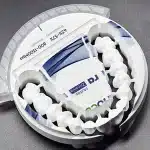
At Hocera, we specialize in advanced zirconia materials for dental and industrial applications. Recently, more customers have asked whether zirconia pucks can also perform reliably in cryogenic environments. Below, we share our insights based on material science, research findings, and our own product expertise.
Zirconia: More Than a Dental Material
Zirconium dioxide (ZrO₂) is a ceramic well-known for its strength, toughness, and stability. With proper stabilization (such as yttria-stabilized zirconia), its mechanical properties remain consistent even under demanding conditions. Key characteristics include:
- High hardness and wear resistance
- Excellent chemical and corrosion resistance
- Low thermal conductivity, useful for insulation
- Toughening effect from phase transformation
These features explain why zirconia is trusted not only in dentistry but also in aerospace, energy, and high-tech manufacturing.
What Cryogenic Applications Demand
Cryogenic environments operate below -150°C, where materials face unique challenges. Applications include:
- Aerospace: handling of liquid hydrogen and oxygen in propulsion systems
- Medical: cryogenic preservation of cells and tissues
- Scientific research: equipment exposed to liquid nitrogen or helium
Materials in these conditions must remain strong, resist cracking from sudden thermal shifts, and maintain chemical stability when in contact with cryogenic fluids.
Zirconia’s Potential in Cryogenic Conditions
Advantages
- Thermal insulation: Zirconia’s low conductivity helps maintain ultra-low temperatures.
- Chemical inertness: resistant to reaction with cryogenic media.
- Durability: hardness and wear resistance make it suitable for moving parts like seals or bearings.
- Phase toughening: In some cases, zirconia maintains toughness even as temperatures drop.
Challenges
- Brittleness risk: at extreme cold, zirconia may fracture more easily.
- Thermal expansion mismatch: When combined with metals or other ceramics, stress may occur during rapid cooling.
- Unpredictable phase effects: structural changes at very low temperatures may alter performance.
Research Insights
Studies have explored zirconia in cryogenic bearings and insulation components. Results show promising wear resistance and friction behavior, but also highlight the need for careful engineering to avoid thermal shock or stress-related failures.
For aerospace and scientific applications, zirconia’s balance of insulation and strength is attractive—but successful long-term use depends on precise material design.
Hocera Zirconia Solutions
At Hocera, our zirconia portfolio is engineered for consistency and reliability, making it a potential candidate for cryogenic innovation:
- Super Transparent Zirconia Blocks: exceptional purity and optical performance, with stable microstructure.
- 1350 MPa White Zirconia Blocks: outstanding flexural strength, ideal where mechanical stress is critical.
- Pre-Sintered Zirconia Blocks: easy to machine for custom cryogenic components.
Although developed for dental laboratories, these products meet demanding quality standards that can extend into advanced industrial uses.
Final Thoughts
Zirconia pucks can indeed play a role in cryogenic environments, thanks to their thermal stability and durability. However, brittleness and thermal stress remain key considerations.
As a trusted zirconia supplier, Hocera is ready to collaborate with partners in aerospace, medical, and scientific industries to explore new applications for zirconia in extreme conditions.
👉 Contact us today to discuss how Hocera zirconia can support your cryogenic or high-performance material needs.