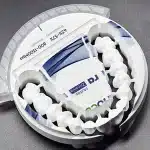
At Hocera, we often receive inquiries from dental labs and clinics about the versatility of our dental milling tools. One question that comes up frequently is:
“Can dental milling tools be used to produce night guards?”
The short answer is yes—but there are important considerations to ensure optimal results.
Understanding Dental Milling Tools
Dental milling tools—also called milling burs or cutters—are high-precision instruments designed to shape various dental materials into accurate restorations. Depending on the application, different burs are optimized for zirconia, glass-ceramics, PMMA, PEEK, and soft resins.
At Hocera, we supply zirconia milling burs, PMMA milling burs, and glass-ceramic milling burs compatible with major CAD/CAM systems. These tools can indeed handle the acrylics and thermoplastic resins commonly used for night guards, provided the right tool type and milling parameters are applied.
What Are Night Guards?
Night guards (occlusal splints) are oral appliances worn during sleep to protect teeth from bruxism—the involuntary grinding or clenching of teeth. They’re typically milled from PMMA discs or soft thermoplastic blanks, offering a custom fit and high comfort for the patient.
Benefits of Milling Night Guards with Hocera Tools
1. Precision Fit
Our CAD/CAM milling burs achieve micron-level accuracy, ensuring the night guard matches the patient’s dentition perfectly. A precise fit not only improves comfort but also increases protective effectiveness.
2. Fully Customizable Designs
CAD software allows dental technicians to adjust thickness, coverage, and occlusal contact points before milling. Whether the patient needs a thin, flexible splint or a thicker protective guard, the design can be tailored in minutes.
3. Faster Production
Compared to manual fabrication, CAD/CAM milling dramatically shortens turnaround times. Clinics can offer same-day night guards in some cases—an attractive selling point for patients.
Important Considerations
- Material Compatibility
Not every milling bur is ideal for soft resins or thermoplastics. For PMMA or night guard discs, we recommend Hocera PMMA milling burs, which feature optimized flute geometry to prevent melting or chipping. - Machine Calibration
Soft materials require different spindle speeds and feed rates compared to zirconia milling. Proper CAM settings are critical to avoid tool wear and poor surface finish. - Operator Skill
Producing a comfortable, effective night guard requires both CAD design expertise and knowledge of CAM strategies. Hocera offers technical support and training to help labs optimize their workflow.
Typical Workflow for Milling a Night Guard
- Digital Impression – Captured via intraoral scanner or traditional impression (later digitized).
- CAD Design – Technician adjusts occlusion, bite plane, and thickness in CAD software.
- Material Selection – Choose the appropriate PMMA or thermoplastic blank for milling.
- Milling – Use compatible Hocera milling burs with recommended spindle speed and cooling settings.
- Finishing & Polishing – Smooth all edges and polish for patient comfort.
- Final Fitting – Verify fit intraorally and make any small adjustments.
Why Choose Hocera Milling Tools for Night Guards?
At Hocera, we engineer our milling burs for long life, consistent cutting performance, and compatibility with the world’s leading dental milling machines. Our customers rely on us for:
- OEM-quality burs at factory-direct pricing
- Specialized tooling for both hard and soft dental materials
- Technical support for optimal CAM settings
Whether you are milling full zirconia crowns, glass-ceramic veneers, or custom night guards, our tools deliver precision, speed, and reliability.
Final Word:
Yes, dental milling tools can be used to produce night guards—if you choose the correct burs and settings. With Hocera’s specialized tools and expertise, you can expand your service offerings, improve patient outcomes, and increase lab efficiency.